The Book That Writes Itself
The Arkham Grimoire’s First Update is Now Available
Hello and welcome, investigators old and new!
It is a privilege and a pleasure to be greeting you today with our very first rules update of Chapter Two of Arkham Horror: The Card Game. The Brethren of Ash have been released into the world, the evergreen card pool is seeing tons of experimentation in the hands of our players, and the Children of Blood loom menacingly on the horizon, silhouetted against a blood moon. It’s an exciting time!
Today’s Grimoire update is on the smaller side, focusing mainly on errata and clarifications, grease to keep the wheels of your gameplay running smoothly and to answer many of the questions we’ve seen crop up over the past few months.
Without further ado, let’s jump right in and see what’s changed!

Glossary
The arcane depths of the Grimoire proved, perhaps unsurprisingly, to have several entries that perplexed its erstwhile scholars. Because of this, we have tweaked the wording on a variety of rules to make their intent as explicit as possible. Chief among these is the fact that reward cards are earned by a player, not their investigator, meaning that once you have completed their prerequisites you can use an earned reward card in any future campaign.
Additionally, we’ve dug up a few pages from the archive that didn’t make it into initial circulation. You will now find familiar and updated rules and mechanics like search, “taking an action,” and “nested skill tests” tucked among their fellows in the glossary. That last subject will also be identified going forward as “queued” skill tests, to differentiate from nested sequences; the former operate using a “first in, first out” queue while the latter use a “first in, last out” stack, so we felt that distinct terminology would be a nice quality-of-life improvement for ease of discussion.
As a side note, some dedicated readers have noticed that the rules section on “must” no longer appears in the glossary as it did in Chapter One. This is not an omission—rather, all “choose” effects now inherently require investigators to choose an option with the potential to change the game state, whether they explicitly contain the word “must” or not. Instead, the word “may” is used to indicate when this requirement is lifted.
Errata
Moving swiftly along, the bulk of this edition’s updates can be found under sections X and XI. Several of the cards in the evergreen pool’s first printing were worded in such a way as to leave players uncertain about the precise timing points or ways some of their abilities resolve. It is our hope that any such questions have been successfully answered with this suite of errata!
FAQs
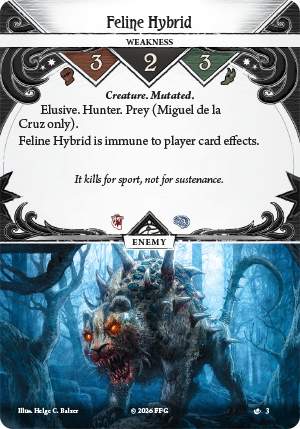
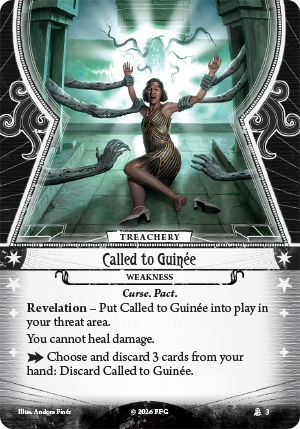
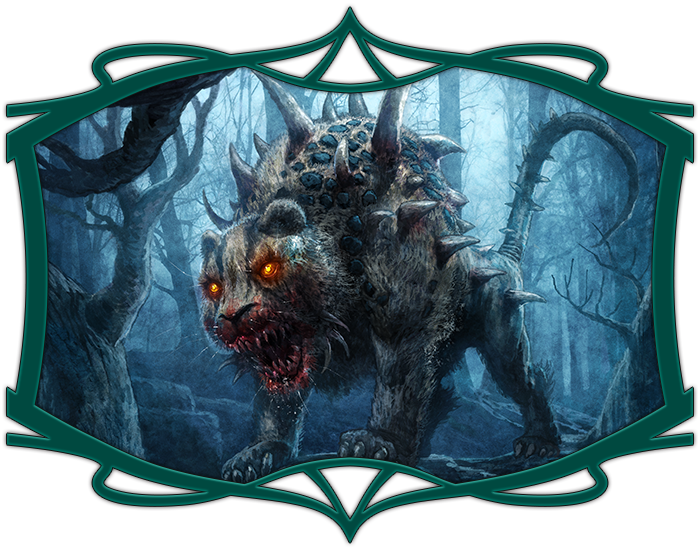
Accompanying the errata are our first set of FAQs for Chapter Two, and the new evergreen investigators are the star of the show! We’ve added clarifications about how Daniela’s ability should be resolved outside her turn or with Fight abilities that have additional action costs, as well as how targeting overrides on abilities like hers function in Chapter Two. Miguel’s annoyingly persistent Feline Hybrid (Miguel de la Cruz, 3) effects are able to negate. And Marie’s signature weakness Called to Guinée (Marie Lambeau, 3) has been clarified to only prevent effects Marie controls from healing herself or others, not to prevent other investigators from healing her.
Though many of our updates to this living rules document occur as a result of the rules team following community discourse or interacting with players through the rules question submission form, that is nowhere truer than with the FAQs. So, thank you to everyone who has submitted a question over the past few months—you’ve been a huge help in providing insight into what answers we can give to help players of all experience levels master the depths of Arkham Horror’s rules!
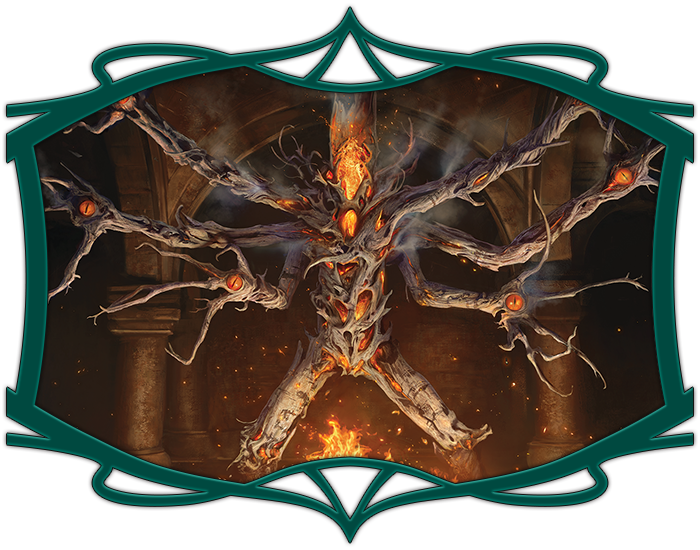
Ultimatums, Boons, and Refractions
As we have begun to officially preview Chapter Two’s first small campaign expansion, Children of Blood, there has been a lot of chatter around one of the campaign’s most exciting innovations: difficulty-level-based variations in setup and card text, beyond just the classic chaos bag alterations that difficulty levels have produced in the past. We on the design team are thrilled to explore this new design space, and hope that it’ll encourage players to shake up their habitual difficulty levels, especially while replaying familiar campaigns! But we also recognize that for some, moving from Standard to Hard or vice versa can be a daunting prospect.
Fortunately, the optional rules are here to help smooth that transition! Players can turn to changing their environment or incorporating ultimatums or boons to tweak their experience for a desired level of challenge. Or, if they’re looking for a simpler way to bridge the gap, the Ultimatum of Malevolence from the final Chapter One FAQ is making a triumphant return, alongside its new sibling the Boon of Nodens. These modifications allow you to play with the normal side of the scenario reference card for your chosen difficulty reversed, alleviating the brutal Hard/Expert symbol tokens or adding more-uncompromising skill tests to the Standard/Easy experience.
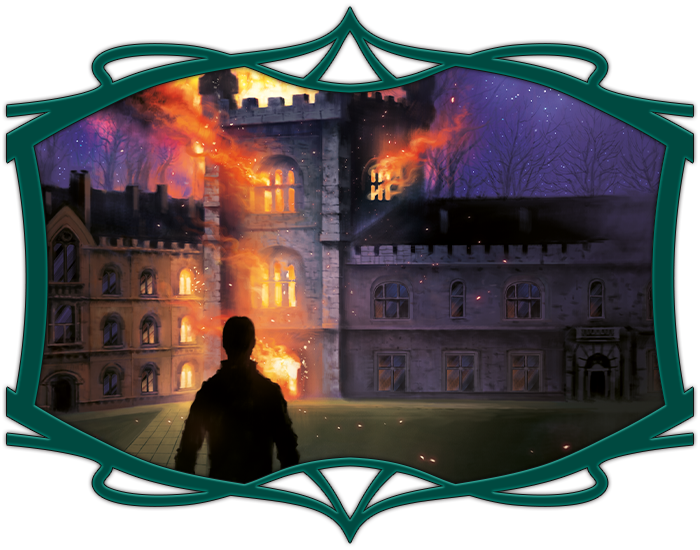
Red Ink and Singed Pages
That’s all we have for you today! We are at present keeping a close eye on the card pool as we gather information for the first Chapter Two installment of the Taboo List, our optional set of balance changes that serve to rein in or raise up player cards that are over- or under-performing. Stay tuned for that in an upcoming update!
And of course, there’s something strange going on in the Waterfront District. When next we open this tome of horrors, it may contain a few new bloodstained pages with rules you’ve never seen before…
…but hey, that’s just what taking care of a sinister, semi-sentient tome of Mythos knowledge tends to be like! It’s always full of surprises.
Thanks for reading, and we’ll see you down by the riverside!
Written by Josiah “Duke” Harrist, Nicholas Kory, A. Reid Bradshaw, and Alex Werner
No products found.
Related News
Kicking Off Crowdfunding
Announcing the Launch of the Arkham Horror: Remastered Crowdfunding Campaign
Gone Without a Trace
Announcing the Traces to Nowhere Scenario Pack for Arkham Horror: The Card Game